Geese - Getting Killed

Album Artwork

Geese

Getting Killed

Type Album Label Partisan Records
Release Cover art by Mark Sommerfeld, Kyle Berger & Phil Gibson
Rayview Score 9.0 masterpiece
Genre Alt-Rock, Art Rock, Indie Rock Release Date 26 September 2025 Label Partisan Records Best Track Taxes, Bow Down, Au Pays du Cocaine If You Like Black Midi, Maruja, Shame, Squid,

Review of Getting Killed by Geese

Geese are the definition of an acquired taste. Getting into them is a bit like learning to drink whiskey or wine. At first it might even make you nauseous. A big part of that comes down to the vocals. Cameron Winter, the band’s 24 year old frontman, has one of the most unique vocal styles to come out of the 2020s, and it is something many listeners don’t immediately click with. But when it finally does click, it really clicks. Just like with whiskey, what once burned suddenly becomes addictive. Before you know it, you are hooked on Cameron Winter’s long, weird, dragged-out notes.

The Brooklyn band have been creating and performing music together since 2016. What started, as they once described it, as “fucking around making shitty beats in high school” on old equipment given to them by family eventually turned into something far more serious. Not long after, the band began receiving offers from multiple major labels before ultimately settling with Partisan Records.

The current lineup consists of frontman Cameron Winter, guitarist Emily Green, bassist Dominic DiGesu, drummer Max Bassin, often seen wearing an impressively large pair of sunglasses during performances, and Sam Revaz, who handles keys for their live shows.

What is most impressive is that each member brings a distinct playing style to the band. Many of their songs feel like one big jam session, with everyone pushing to outdo each other by creating new rhythms, sounds, and solos. Emily often seems almost possessed when playing live, pulling some of the most unusual guitar sounds out of both the stage and the studio. Cameron, meanwhile, loves to stare you down while performing, pouring all of his energy into those twisted vocals.

“We were trying to do Projector as hi-fi as possible. The only reason it sounds lo-fi is because we had shitty equipment, and that’s just how it came out. We were trying so hard to make it shine like it was professional. But it didn’t by virtue of what we were working with. And so, when we went into an actual studio and we were working with professionals, everything was clean and straightforward and a bit less dark and cavernous sounding.” – Geese about the creation of “3D Country”

“Getting Killed” is the result of a lot of hard work and self improvement, with each album showing the band’s growth. “A Beautiful Memory” has largely been forgotten and is almost impossible to find online. It was followed by “Projector,” which feels more like the band’s true debut album. Created in just five months, it already showed the potential Geese had.

“I could see future albums going in more of a direction where we take the best of both worlds and maybe sometimes a professional studio is in order and sometimes, we can just record shit with an iPhone and see what works best for whichever song or part.” – Geese about the creation of “3D Country”

“3D Country” is where the band truly begins to shine. They spent about two and a half years working on the record, deliberately experimenting and, more importantly, allowing themselves to fail. As the band has said, many of the songs that eventually made it onto “3D Country” were written in the final stretch of those two and a half years.

All of that time experimenting and learning how to properly record pushed the band to throw everything they had into the process. As Geese themselves have said, they went all out, adding choir samples, string sections, horns, and anything else that came to mind.

Their growth is also visible outside the studio. Shows now sell out almost instantly, including their upcoming performance at Paradiso, where thousands have already joined the waiting list for a handful of resold tickets.

“THERE’S A BOMB IN MY CAR!”

Geese throw out the idea of easing into the album with “Trinidad.” A song title that sounds like it should let you relax and think about tropical beaches quickly proves to be the opposite. Instead, you get Cameron Winter’s screaming vocals and a remarkable guest feature from JPEGMAFIA, who joins in on the chaos. Hopefully you are not sitting in a parking lot with law enforcement nearby, because that combination might send you straight to prison.

Everything about “Trinidad” sounds strained. The instrumentals feel like they are lagging behind, the vocals sound almost painful, and the whole track carries this tense, uneasy energy.

“The first song is crazier, so we decided to tone it down with something that you know even an idiot could understand.” – Cameron Winter about “Cobra” on BBC Radio 1.

“Cobra” feels like sunny weather right after a big storm has passed. Mellow guitars are layered on top of each other, creating a rich and hypnotic sound. Cameron’s lyrics are always up for debate, with many saying the song is about a broken relationship that feels both toxic and seductive. Other fans speculate it might be about masturbation, which is hilarious to think about.

“Cobra” really shines in smaller settings like Tiny Desk, where the song is able to take its time and let its calmness stand out, rather than feeling like just a brief pause between the craziness of the rest of “Getting Killed.”

“Husbands” keeps the calm atmosphere introduced by “Cobra,” layering soft percussion beneath the guitars. The arrangement works well in intimate settings like Tiny Desk, where the subtler details have room to breathe. Even so, the track never quite stands out and ends up feeling like one of the album’s weaker moments. Cameron’s lyrics remain as elusive as ever, summed up by the line: “I’ll repeat what I say, but I’ll never explain.”

“I, I can’t even hear myself talk I’m trying to talk over everybody in the world”

The title track “Getting Killed” was the song that stood out the most during my first listen. It is filled with energy, especially coming right after the calmer stretch of “Cobra” and “Husbands.” The track throws you straight back into what Geese does best: chaotic jamming. One of the most striking elements is the use of samples from a Ukrainian choir, chopped up and blended into a wild mix of hard rock guitar riffs and a punchy bass line. The song feels packed from start to finish, but it still finds room to breathe by dividing itself into multiple sections.
“You can’t keep running away From what is real and what is fake You can’t keep running away From what is real”

“Island of Men” feels like a reflection on the way people retreat into their own carefully built worlds. The song hints at the comfort of isolation, where reality can be reshaped to fit whatever story we want to believe. In a time dominated by social media and constant digital noise, that kind of self-made island feels more familiar than ever.

The song captures something that was already happening but is now being accelerated by the internet. These self created bubbles widen the gap between what people think and feel, making real connection harder and harder. In a time that is supposed to be defined by constant connection, loneliness only spreads further.

“All the horses must go dancing. There is only dance music in times of war”

The second single “100 Horses” has one of the dirtiest openings on the album, instantly giving you the urge to sell everything you own and start a new life as a cowboy somewhere out west. I can already picture the big cowboy hat, the fat cigar, and a hundred horses waiting in your newly bought stable.

Dominic DiGesu and Emily Green carry this song with that dirty, funky bassline and guitar riff. I was an instant fan the first time I heard the single. I do have to admit, though, that I struggled a bit with Cameron’s extra long, stretched out vocals. I still think the song could have been even better with vocals more in the style of “Gravity Blues,” but honestly, that bassline alone is enough to make me consider changing professions.

In my opinion, the weakest song on the album is “Half Real.” Cameron leans a little too much into the dragged out vocal style, making the song feel slow and a bit bland. Hearing the word “lobotomy” used in a song is fun, though.

“Baby you can change and still choose me”

“Au Pays du Cocaine,” on the other hand, is one of the most emotionally loaded songs on the album and a personal favorite for many fans, for good reason. The number of memorable lines and the sheer feeling packed into the song are incredible, and it works perfectly with Cameron’s vocal style.

The title translates to “In the Land of Cocaine,” but it is also a play on the French term “Le Pays de Cocagne,” which refers to the medieval mythical land of Cockaigne, a place of luxury and gluttony. The song itself is open to interpretation, as Geese rarely explain their lyrics. Some listeners interpret the song as the story of a relationship falling apart, with one partner desperately trying to hold it together

“You can stay with me and just pretend I’m not there”

Another interpretation, which many fans point to, is that the song deals with drug addiction. The title can be seen as a deliberately “incorrect” or punning version of the proper French phrase “Au pays de la cocaïne.” That connection makes sense when you consider the idea of Cockaigne as a land of excess and false comfort, which mirrors the appeal of cocaine.

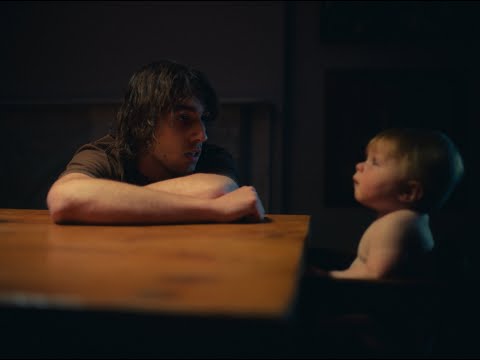
There is also a third possible vision suggested by the music video, where Cameron appears to have a conversation with either his younger self, eventually climbing into a crib. It reflects the kind of escapism that can be found in the land of luxury and comfort.That is what I love about Geese. Their songs are rarely literal. Most of them can be interpreted in several ways, with “Au Pays du Cocaine” being one of the best examples.

“And she said, “I’ve met angels so deep undercover That they’d sit on Solomon’s throne”

One of my personal favorite Geese songs, “Bow Down,” plays with religious metaphors, with the line above being my favorite lyric on the entire album. The song feels much darker than the rest of the record, built around themes of submission as the command to bow down repeats throughout the track.

“I was a sailor, and now I’m a boat” & “I was a car, and now I’m the road”

“Bow Down” also feels like a loss of oneself, with the lyrics metaphorically shifting from being in control to being controlled. You start as the sailor steering the ship, but end up as the one being steered, like a car driving over the road before turning into the road being driven over.

“If you want me to pay my taxes You better come over with a crucifix”

I really want to take this lyric at face value and believe Cameron is literally talking about hating taxes so much that you would have to nail him down before he pays them. Sadly, it is most likely about something heavier: a long term commitment that keeps taking and taking, either mentally or physically.

The most beautiful rendition of the song might be the performance on Jimmy Kimmel Live. The warmth that comes from the switch halfway through the track feels like a burst of color. If we look purely at the instrumentals, it might be the strongest song on “Getting Killed.”

“And Joan of Arc, she warned “The Lord has a lot of friends, and in the end He’ll probably forget he’s met you before”

“Long Island City Here I Come” closes the album with a newly found chaotic energy that serves its purpose as a final climax well. It is probably the song I have listened to the least, mainly because it does not work as strongly on its own. Within the context of the full album, though, it feels like the perfect ending.

It sounds like the record has reached a point of freedom, stepping onto an uncertain path. Hopefully Geese continue down that road, because if they manage to release something of this magnitude again, they could easily become one of the defining bands of the 2020s. The potential and artistic authenticity are undeniable.

Album Artwork

Cover art by Mark Sommerfeld, Kyle Berger & Phil Gibson

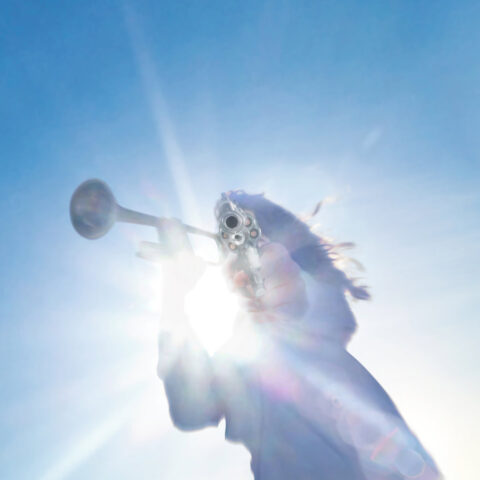
My first impression of Geese’s album cover is that of an angel in a white gown taking you out in Fallout: New Vegas style. Looking closer, the imagery actually fits the album well. Religion is referenced throughout the record, making the angel feel less random and more like a visual extension of the themes running through the songs.

On a digital screen the album cover bursts with a deep, bright blue. Seeing it on vinyl slightly dulls that effect, losing some of the intensity the artwork has on screen. The back cover makes up for it a bit, though, showing the gun pointed in the opposite direction, almost as if it is taking revenge on the sun.

In a time where many album covers feel bland and forgettable, Geese once again stand out by leaning into something more artistic. It adds another layer to their identity and strengthens their credibility as a band that clearly cares about presentation.

9.0 Rayview Art

Featured Tracks

Taxes

Taxes

Au Pays du Cocaine

Au Pays du Cocaine

Trinidad

Trinidad

Rayting
9.0 /10
masterpiece

editorial

Sign in to Write a Review

Share your score, write reviews, or reply to others.

Sign In

No reviews yet

Be the first to share your thoughts on this album.

Leave a Review