Review of Mahal by Glass Beams
Glass Beams makes you feel like a snake, swaying uncontrollably to the music, as if every note from a charmer’s flute has taken full control of your body.
I stumbled upon Glass Beams completely by accident. The Australian trio, who began their journey during the COVID lockdowns, were playing at Lowlands, and within minutes I was hypnotized by their presence. There was something almost otherworldly about them. Each member performed behind masks of gold and diamonds, adding a sense of mystery and luxury that perfectly matched their sound. It felt less like a performance and more like being pulled into an ancient ballroom filled with royalty.
“I think the ego side of being an artist can twist things up and get in the way of the art. When I put on the mask, I can embody the feeling of just being a vessel for the music. Let the idea flow through me and just execute it, you know?” — Rajan Silva to Vogue India
And they delivered. The EP does not feel like it was made by just three people. Instead, it feels like something created by a collective spirit, a group guided purely by the soul of music itself. It helps that there are no lyrics and that the band never shows their faces, but even with their limited releases, they leave you wanting more.
“I love the idea of leaving people wanting to know more.” — Rajan Silva to Vogue India
“Horizon” kicks off the album with a mix of Sahara-style guitar and deep, Western-style burrowing bass. It flows seamlessly into the track that best showcases Glass Beams’ full power.
“Mahal” carries the EP on its camel-like back. The hypnotic bass coils through the song, while the Eastern-infused guitar takes the lead like a vocalist. The drummer maintains a steady BPM, weaving in chimes that give the track an even more spiritual, meditative quality. It’s remarkable how much of a rich, immersive soundscape Glass Beams has created with just three members.
“Orb” continues the hypnotic momentum of “Mahal.” It opens with a soundscape reminiscent of its predecessor, but soon begins experimenting with effects on the instruments, giving the track an underwater, reverberant feel. Halfway through, it shifts into a rhythm that makes you want to sway, even belly dance. Trust me, you do not want to see that.
“Snake Oil” slows the pace down, and it is here that the main weakness in Glass Beams’ sound becomes noticeable. The track starts to feel repetitive, with many of the Eastern-influenced guitar riffs echoing earlier songs. A break in the pattern, either with a burst of energy or a sharper contrast drawing on more Western sounds, could have added variety and kept the momentum alive.
‘I had a dream, to try to combine Western and Indian music into a new form of music which has no particular name but is melodious and touching, and which combines the most modern electronic devices with the old traditional instrument…’ — Rajan Silva to Vogue India
“Black Sand” brings the playful energy back. By adding just a touch of delay and reverb to the Eastern guitar, the track leans deeper into Indian influences, with certain passages even recalling the microtonal experimentation of King Gizzard & the Lizard Wizard.
Glass Beams are hypnotic, mysterious, and genuinely singular. In a world where most artists are optimised for streams and algorithms, they are doing something foreign and more patient, building a sound that asks you to slow down, dissolve, and listen. A full album feels both inevitable and overdue. When it arrives, one hopes they push further into the tension between repetition and rupture that makes their best moments so disarming.
Album Artwork
Cover art by Glass Beams
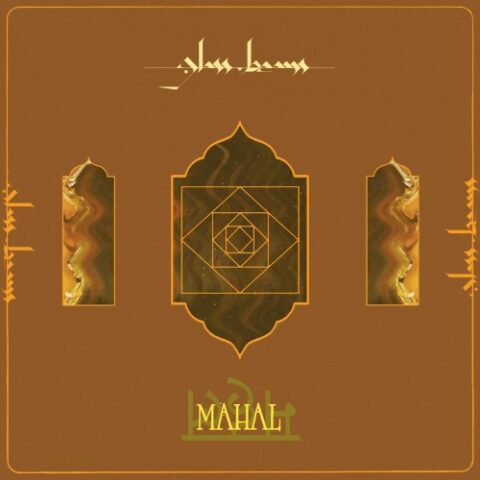
The album uses a warm color palette filled with brown, amber, and gold, giving it the appearance of a Middle Eastern royal treasure. The marble texture, along with what seems to be an outline of the Taj Mahal, adds to the feeling of stepping into an Arabic palace full of mystery and wonder.
This atmosphere is reinforced by the typeface, which fits the overall style well. It blends Indian and Arabic influences with a Western touch, much like the music itself. At first glance, the lettering looks almost like Arabic script, but it is actually written in English, adding an extra layer of intrigue to the design.
At the same time, the heavy use of brown can make the cover feel a bit dull on first impression. However, spending more time with it, especially while listening to the album, reveals more depth and detail. It ends up enhancing the experience, making the music feel even more foreign and immersive.
Featured Tracks



editorial





No reviews yet
Be the first to share your thoughts on this album.