
Review of Lahai by Sampha
Sampha returns after a six-year hiatus, sounding like a dystopian digital angel on Lahai.
On Lahai, Sampha delivers something truly unrivaled, blending his powerful, singular voice with the creative freedom that comes from shaping a project over years. The result is a style so distinctive it’s almost impossible to mistake for anyone else.
His voice is hard to describe. It feels as if he is mumbling while still pronouncing everything with clarity, precision, and power. It is a one-of-a-kind presence in the industry. Combine that with his incredible improvisational ability, and it is no surprise that so many of today’s biggest artists want him as a feature, including Kendrick Lamar, Frank Ocean, Kanye West, Jessie Ware, and Solange.
“Lahai, My grandfather’s name, My middle name, My next musical chapter, My next album”
And what an album this is. Everything Sampha does here is incredible, where do you even start with an album that makes you feel like you’re both drifting and flying at the same time?
The greatest strength of Lahai is its already complex and deeply emotional instrumentals, with many songs driven by uptempo percussion and outstanding drumming from Yussef Dayes, Kwake Bass, and Morgan Simpson, formerly of black midi. This makes the entire album a blast to listen to; it never drags, thanks to its rich layers of sound. Combine this with layers of digital textures, synths, and piano work by Sampha himself, and the instrumentals alone carry the album.
“I sometimes struggle to add lyrics to my music because what I express musically is already so full of emotion. It might be easier for me to write for someone else.” – Sampha
Though Sampha himself claims writing lyrics are difficult for him, he still manages to portray a strong feeling of growth, both mental and physical. Much of the album’s lyricism focus on floating away, flying away, and reflecting on the concept of time.
“It’s about the importance of connection to both myself and others, and the beauty and harsh realities of just existing. It’s about acknowledging those moments when you need help – that requires real strength. I hope people can enjoy that feeling of someone being there for you, even if that person doesn’t have the answers. Just calling someone up without overthinking… letting go and just dancing.. wanting to see past the mundanity of things and appreciating the magic of it all, from birds nests to spaceships.”- Sampha
After the strong opening track “Stereo Colour Cloud (Shaman’s Dream),” which pulls you straight into the iconic Lahai sound, “Spirit 2.0” really reveals Sampha’s fragile and humble side. He has said he wrote the song while walking through parks in solitude, making it feel like a song he needed to hear for himself. In many ways, Lahai is about the importance of non-material things, like having friends to fall back on in times of need and having the strength to actually open up about needing help.
“This also came from this kind of acoustic/MIDI jamming. I wrote this pulsing, slightly clash-y metronomic piano and wrote over and jammed over it. I put the song together with a producer called Pablo Díaz-Reixa [Spanish artist/producer El Guincho], who helped arrange the song. I sort of freestyled some lyrics and came up with the dancing refrain, and then had this idea of someone having a conversation with someone they hadn’t seen in a long time, and just remembering how good it is, how good it felt to dance with them.”
– Sampha
What I really find strong in “Dancing Circles” is the double layered, and sometimes even triple layered, vocals throughout the track, making it sound like a real conversation. It reminds me a lot of Marvin Gaye’s “What’s Going On,” where he creates the same kind of warmth and sense of life through that vocal approach.
“But we’re not where we used to be, of course
I lost the map but still we could explore”
“Suspended” is probably the one track that has everything Lahai has to offer, and more. Its beautiful lyrics feel like a mixture of reality and a dreamworld. Sampha is at his best here, with a gospel-like delivery on the chorus and a flowing vocal performance that blends perfectly with the backing vocals. All of it leads into a composition filled with digital textures, a deep, drilling bassline, and the ever-present piano.
“This feels like the midpoint of the record. I guess in this record I was interrogating spirituality and recognising I hadn’t really codified, or been able to put my finger on, any sort of metaphysical experience, per se—me somewhat trying to connect to life via a different view. The song is about me recognising my own finitude and thinking about the people I’ve lost and recognising, through becoming a father myself, that not all is done and I’m part of a journey and I can see my parents or even my brothers, my daughter. [It’s] about connection—to the past and to the future and to the present. Any existential crisis I was having about myself has now been offloaded to me thinking about how long I’m going to be around to see and protect and help guide someone else.” – Sampha
Sampha describes it well himself. The lyrics on “Satellite Business” feel like staring into the sky and realising that, even when you think you have the answers, you really do not. It also seems to connect deeply to Sampha’s traumatic experiences, from losing his father at a young age to now being a father himself, which must bring a strange and heavy feeling.
It is also really worth checking out the extended version featuring Little Simz. They build beautifully on an already great song.
“Couldn’t stomach those blues you articulate, I’ve been
Acting like your actions are from outer space
But I understand that I’ve been out of place”
Can I start by praising that subtle but incredibly smooth and funky bassline on “Jonathan L. Seagull”? I listened to the song about ten times before realising there is a real gem of a bassline buried in there.
“Jonathan L. Seagull” draws direct inspiration from Richard Bach’s Jonathan Livingston Seagull. The story follows a seagull who rejects the routine, food-driven life of his flock in pursuit of mastering flight. That same spirit runs through Lahai, where themes of self-discovery, personal growth, and passion are central. You can even hear seagulls at moments throughout the album.
“Careerism pothole, like “Where’d my love ones go?”
I cannot be the only one hearing “Careers is a butthole.” That aside, “Only” is by far the most catchy and replayable track on the album. Bright trumpet lines sit on top of a deep, trembling bassline, while the vocals shift between a simple, memorable chorus and faster, more fluid verses.
“I feel like there’s a lot of times I just step over my clothes instead of pick them up. I’m so preoccupied with thinking about something else or thinking about the future, there’s times where I could have actually just been a bit more present at certain moments” – Sampha
Give yourself five to ten minutes a day to do something small and simple, or even nothing at all. That is the advice Sampha gives on “Can’t Go Back,” with the song itself repeating it plainly. We focus so much on tomorrow and the future that we forget about the present. It is a message that affects all of us, and one that really stands out on the album.
Lahai begins to waver in its final quarter, where tracks like “Evidence,” “Wave Therapy,” and “Rose Tint” fail to leave a lasting impression. They are still enjoyable, with “Evidence” carrying an underwater-like quality, and the switch-up during “I-I-I can get stuck in perfection” feeling genuinely euphoric.
“What If You Hypnotise Me?” stands out in that final stretch, driven by a playful, clock-like rhythm and piano work that recalls “Process,” with Léa Sen coming in with an angelic voice that rounds out the album.
Lahai is a beautiful and carefully crafted project, shaped over six years since Process. Sampha’s angelic and distinct voice already sets him apart, but what stands out most is how he builds on everything he did before. By blending digital textures, live instrumentation, and layered vocals, he creates a world that moves between dreaming and reality, spirituality and soul.
Album Artwork
Cover art by Durimel, Jonny Lu
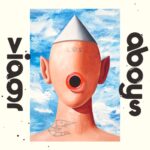
We look up from the ground into a bright, cloud-filled sky, with Sampha embodying the sense of freedom and flight that runs through the album and echoes Jonathan Livingston Seagull. There is a feeling of weightlessness to it, as if everything is lifting, both visually and emotionally.
It also creates a strong contrast with Process, where the tone was much darker and centred around isolation. Six years later, that darkness has shifted into something far brighter, more open, and almost holy in its imagery.
Sampha no longer appears alone. A second figure stands beside him, possibly representing his daughter or partner, but more importantly reinforcing the idea of connection. It mirrors the themes throughout the album, where isolation gives way to presence, support, and shared experience, especially on tracks like “Spirit 2.0.”
It is a rare case where the artwork does not just accompany the music, but fully embodies its shift from isolation to connection, from weight to lightness.
Featured Tracks


editorial





No reviews yet
Be the first to share your thoughts on this album.