Review of Superbloom by Jessie Ware
Pop-soul diva Jessie Ware’s third installment, “Superbloom,” is an attempt to balance the sensuality that defined the first two chapters of her disco trilogy with a warmer, more domestic side of her life as a wife and mother.
The album does feel more like a diva turned mother, with most of the songs leaning into a pop-soul approach that really suits her knack for layered harmonies and controlled vocals. She doesn’t abandon sensuality altogether though, with tracks like “Ride” leaning further into club-ready dance-pop, because nobody is too old to make sensual tracks!
“At first I wanted to make something that was even more straight-up dance. But I love soul music so much, it’s what I grew up on. Artists like Dusty Springfield, Stevie Wonder, D’Angelo,” Jessie Ware told 3voor12.
And honestly, I’m glad she stayed close to soul, because the album is a mixed and slightly messy experience for me, with the dance-pop tracks coming out as the weaker songs on the record. “Sauna” is the big exception.
The opening half is strong, before it begins to slip with “Mr. Valentine.” Songs like “I Could Get Used to This” stand out the most, carried by funky basslines and some of Ware’s most dynamic vocal work on the record, including a striking tone switch halfway through the track. It fits neatly into the current wave of artists like Beyoncé and Olivia Dean leaning into a pop-forward soul sound, built equally for radio play and commercial success while still resonating with more dedicated soul listeners.
On the title track, Ware pulls from nostalgic influences like Minnie Riperton and folds them into a more contemporary pop frame. “I love making current music, but I do have a mad love for nostalgia,” she told NPR. As with the album’s strongest moments, the bassline does the heavy lifting here, carrying the song’s club groove, while the swelling string arrangements nod toward a Philly-soul influence.
Jessie Ware on “Automatic”: “It’s about my husband, and how he gives me the space to be the woman I want to be. I wanted it to feel like that moment in Saturday Night Fever when ‘More Than a Woman’ starts playing. Everyone on the dance floor, everyone joining in. It’s inclusive: for mothers, for grandmothers, for a barbecue, for the start of the evening. You can always put it on. It’s shamelessly romantic. The Bee Gees were definitely a reference,” she told 3voor12.
“Automatic” is probably the best example of Ware’s shift into a more mature, settled sound, one that works on the dance floor but also as something to have on in the background while trying to concentrate at work, or writing a review, as it turns out. The Philly-soul influences and the bassline are still there, but this time they sit back and let Ware’s vocals take the lead. It also blends seamlessly into “Chariots of Love Interlude,” which bridges the gap into the sensual dance-pop of “Sauna.”
Ware told 3voor12 that “tracks like ‘Ride,’ ‘Sauna’ and ‘Mr. Valentine’ are a bit dirtier, a bit naughtier,” and “Sauna” is where that naughtiness lands best. It has a real Beyoncé energy to it, even if no direct line gets drawn. The second that deep synth starts looping you feel like a diva on the dance floor, with Ware’s vocals sitting somewhere between sensual and in control. The Beyoncé of it all goes further still, because “Ride” is what Ware thought of the moment Beyoncé announced Cowboy Carter, just replace the horse with a disco ball.
The dance-pop track that doesn’t land for me is “Mr. Valentine.” Starting with what works, that deep trembling bass note that drops in every 20 seconds or so is a genuinely fun touch, and Ware’s vocal energy is as strong here as anywhere on the record. The problem is the chorus, a repeating “Mr. Valentine, Mr. Valentine,” that feels jarringly out of place. It fractures a song that could have been a lot more fun, and the blaring, every-direction-at-once synths feel far more suited to a DEVO track than anything that fits the Jessie Ware persona.
The one real standout in the back half of the album is “Don’t You Know Who I Am?” It puts the synths to much better use, pairing a looping synthesizer with theatrical, film-like strings underneath. The result blends 70s dance music with a Bond-like sensuality, gentle and confident at the same time.
The rest isn’t bad, just not memorable. “16 Summers” sounds like a B-track from a Disney soundtrack for some forgotten princess. “No Consequences” would have worked nicely as an early 2010s outro, background clapping and all. “Mon Amour” and “Love You For” are fun enough, but they’re thinner echoes of what the album already did better earlier on.
Superbloom has its moments, but as the closing chapter of the trilogy it doesn’t quite reach the heights of its predecessors. “I Could Get Used to This” and “Sauna” are real highlights, but the record as a whole starts to feel like something built for playlists and radio edits rather than a coherent album you’d put on front to back.
Album Artwork
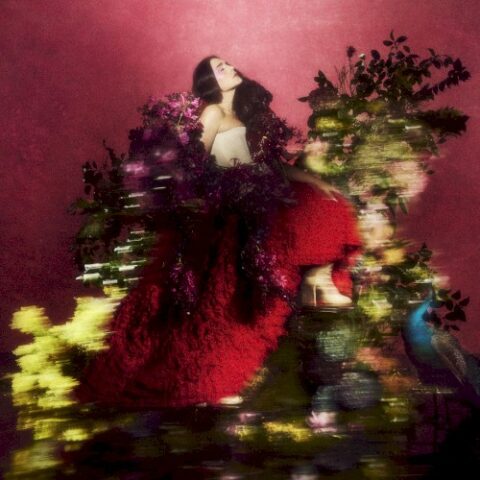
Cover art by Jessie Ware
I sadly wasn't able to confirm who the album cover artist is, but let's take a closer look at the cover for Superbloom.
My first thought is that it's crowded. There's too much happening, with a lot of elements competing for attention and no clear sense of hierarchy behind the composition. The floral decoration is barely legible because of the heavy blur, there's a peacock tucked into the bottom right that adds nothing, and Jessie Ware is posed in the middle in a beautiful red dress, but you can barely make out the dress or the ornament she's holding through that same over-the-top blur.
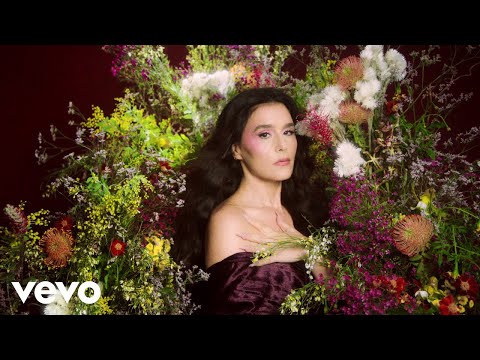
It could have been a great album cover with a better-aligned composition, less visual blur, or in my opinion none at all, and a tighter focus on Jessie Ware herself, covered in flowers. Something closer to the visuals for the song "Superbloom" would have worked far better.
Featured Tracks


editorial






No reviews yet
Be the first to share your thoughts on this album.